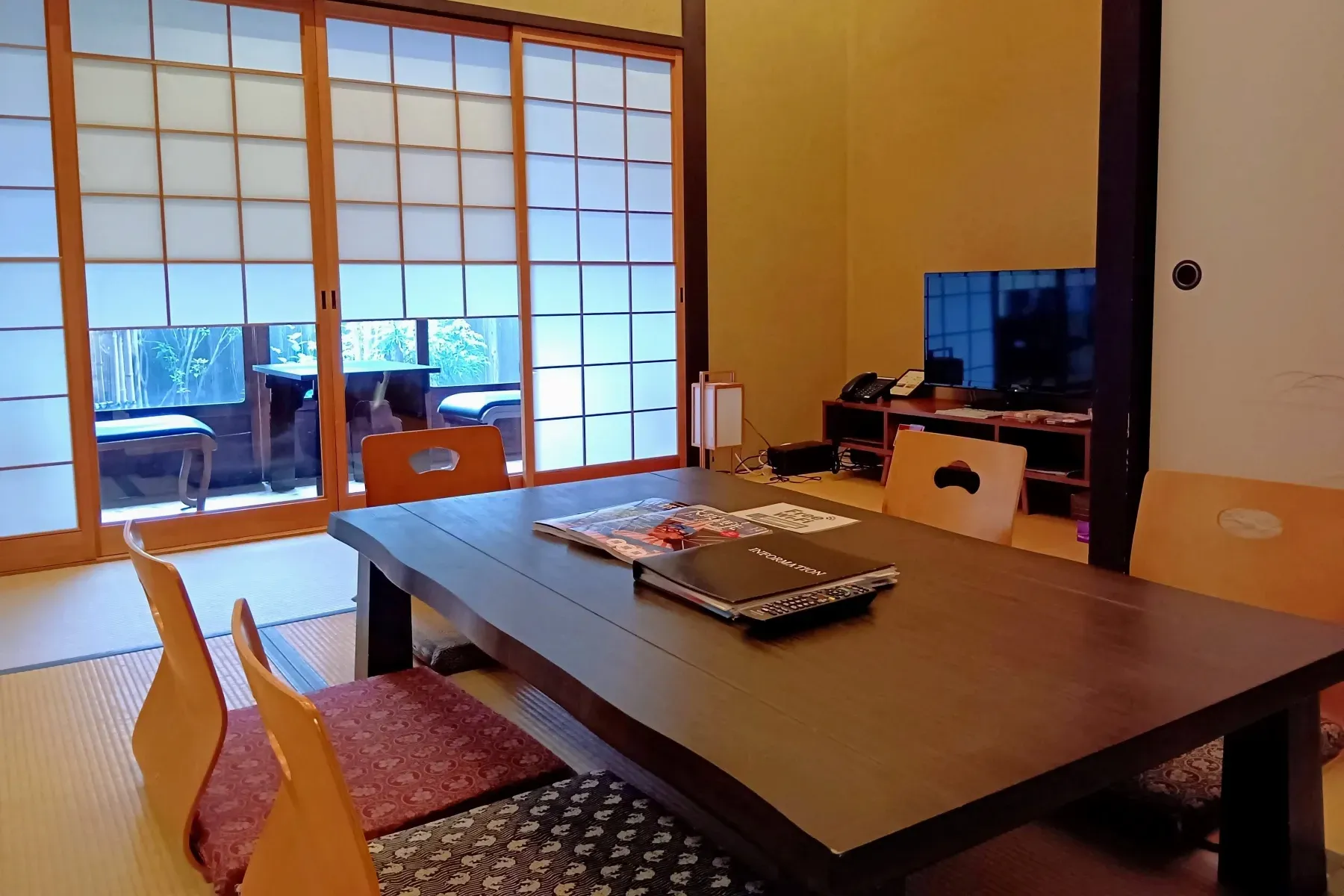
A machiya townhouse in Kyoto is still a place to stay, but the rhythm is a little different from a hotel. There is not always a front desk, and you spend the day on tatami or wooden floors, more like living in a house. The first hour can feel busy: where to put the bags, how the hot water works. That small difference is also part of what makes a machiya interesting. Rather than looking for a perfect hotel substitute, it is easier to prepare as if you have been invited into someone’s home.
Settle in as if you were entering a home
Take your shoes off at the entrance
In many machiya, you take your shoes off at the door. Not stepping inside in wet shoes, and using the indoor slippers provided or your own socks, protects the floors and keeps your own feet more comfortable. Tatami and wooden surfaces show signs of use more readily than hotel carpet does. There is no need to feel tense about it. Still, if you avoid setting hard objects directly on the floor and try not to drag your feet, the house feels better for the rest of your stay. It is less like renting an old building, and more like being invited into a quiet home.
Sound travels more than you expect
Older buildings can carry sound. Through wooden doors and screens, you may hear not only voices within the machiya but also sounds from neighbouring homes or the street. In a machiya in a residential area, a little care with late-night conversation and wheeled suitcases helps everyone settle. This is less about strict rules than treating the house and its surroundings with care. Thanks to that same quiet, the sound of rain and the way the morning light comes in are easier to notice, and that too is part of a machiya.
Prepare for the shape of the building
Stairs, steps, and large bags
Some machiya have steep stairs or small level changes. An entrance may be tight for a large suitcase, and some rooms require carrying bags up to the second floor. Not every house is like this. If you plan to bring large luggage, check the information sent by your accommodation. Picturing the entrance once before you arrive makes the first minutes at the door easier. Luggage often grows a little by the time you head home, so leaving some spare space on the way there suits the narrow spaces of a machiya.
Read the notes before you bathe
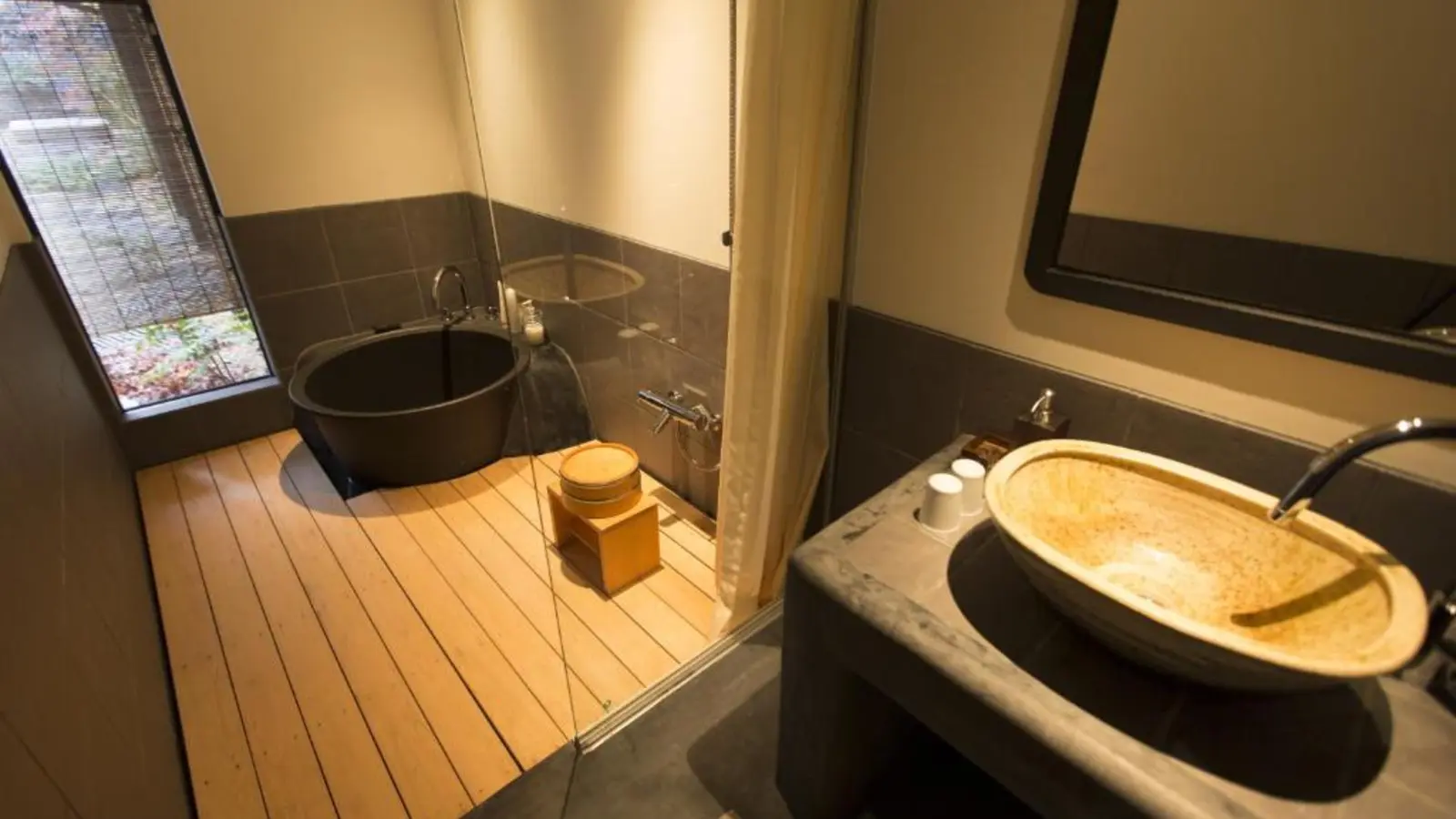
Some machiya have a soaking tub; others are set up mainly for showers. Hot-water controls also differ from house to house. Do not fill in the gaps by guessing. Check the information sent by your accommodation. Reading the instructions first is easier than accidentally running too much hot water, and the bath afterwards is far more relaxing. The corridor after a soak can feel cooler than a hotel hallway. That contrast is part of a machiya night.
Summer heat and winter chill
Kyoto summers can be humid, and winters can feel cold close to the floor. A machiya may feel changes in the outside air more than a concrete hotel does. Breathable clothes in summer, and a layer you can put on indoors in winter, make mornings and evenings easier. It also helps to keep sightseeing clothes a little separate from what you wear around the house. Buildings and equipment differ, so for the final call on what to wear, check the information sent by your accommodation.
What to check before you arrive
It helps to check these points against the information from your accommodation:
- How check-in works, and when to arrive
- Shoes at the entrance and indoors
- Stairs, steps, and where bags can go
- How bathing and hot water work
- Consideration for neighbours, and how to spend the evening
- Clothes for the season, and indoor temperature swings
If something is unclear, do not guess. Check the information sent by your accommodation. What is written there is practical advice for that particular house, and it is more reliable than a general article.
A little preparation, then the house takes over
A machiya is not a perfect stand-in for a hotel. Take your shoes off, keep voices a little softer, and choose bags that suit an older building. That much preparation is enough for the feel of tatami, the light in the garden, and the deep quiet of the night after a bath to reach you. If this is your first machiya stay, there is no need to worry. Read the notes once before you leave, and the time that only a machiya offers feels much closer.